Your Portfolio is Obsolete. Here's the AI-Powered Workflow Recruiters Want to See in 2026.
The era of the uniform, one-size-fits-all web property is officially over. As we journey through 2025 and 2026, the prevailing "AI vibe" in web building is one of deep tailoring. The motivation of the AI website maker is Artificial Intelligence, functioning as a chief architect for every single visitor who navigates a platform. This is not simply about putting a visitor's handle into a welcome; it's about basically overhauling the content, mechanics, and appearance of a web presence in the moment to produce a bespoke experience for an viewership of an individual. This evolution is opening up elite web creation and reinventing what it represents for a site to be actually "user-centric."

Production for the Visitor: The Adaptive Server-side
The allure of intense tailoring for the AI website creation starts way in the site's structure. Developers in 2025 are no longer building static funnels but are instead producing adaptive frameworks where AI operates as a primary controller, assembling individual engagements on the go. This necessitates a shift away from unchanging script and toward a more flexible, adaptive framework of production.
Procedural Journey Mapping and Framework
The most major evolution for the AI website coding is in how a customer explores a webpage. Instead of using a static navigation plan, each client's route is systematically built built on their information signature and immediate interactions.
- Anticipatory Navigation: AI evaluates a individual's access point, past purchases, and browsing habits to predict their purpose and adaptively rearranges menu systems and CTAs to display the most most seamless course to conversion.
- Live Feature Control: An AI can ascertain a visitor's skill level and adjust capabilities accordingly. For a proficient individual, it might show complex sorting mechanisms, while for a newcomer, it might present a uncomplicated, walkthrough shopping flow.
- Adaptive Information Sections: The actual content of a screen is no longer fixed. An AI can compile item summaries, entries, and even compliance statements from a repository of modules, tailoring the style, size, and wording to strike a chord with that distinct person.
The Dynamic Frontend: Appearance That Evolves and Anticipates
The display is where this custom server-side comes to actuality. The "AI vibe" in visuals is about building a aware surface—an frontend that doesn't just act in response to taps but intelligently conforms to the person's circumstances, desires, and even unarticulated aim. This signifies the advancement from fluid grid to fully prescient interface.
Situationally-Aware and Fluid Frontends
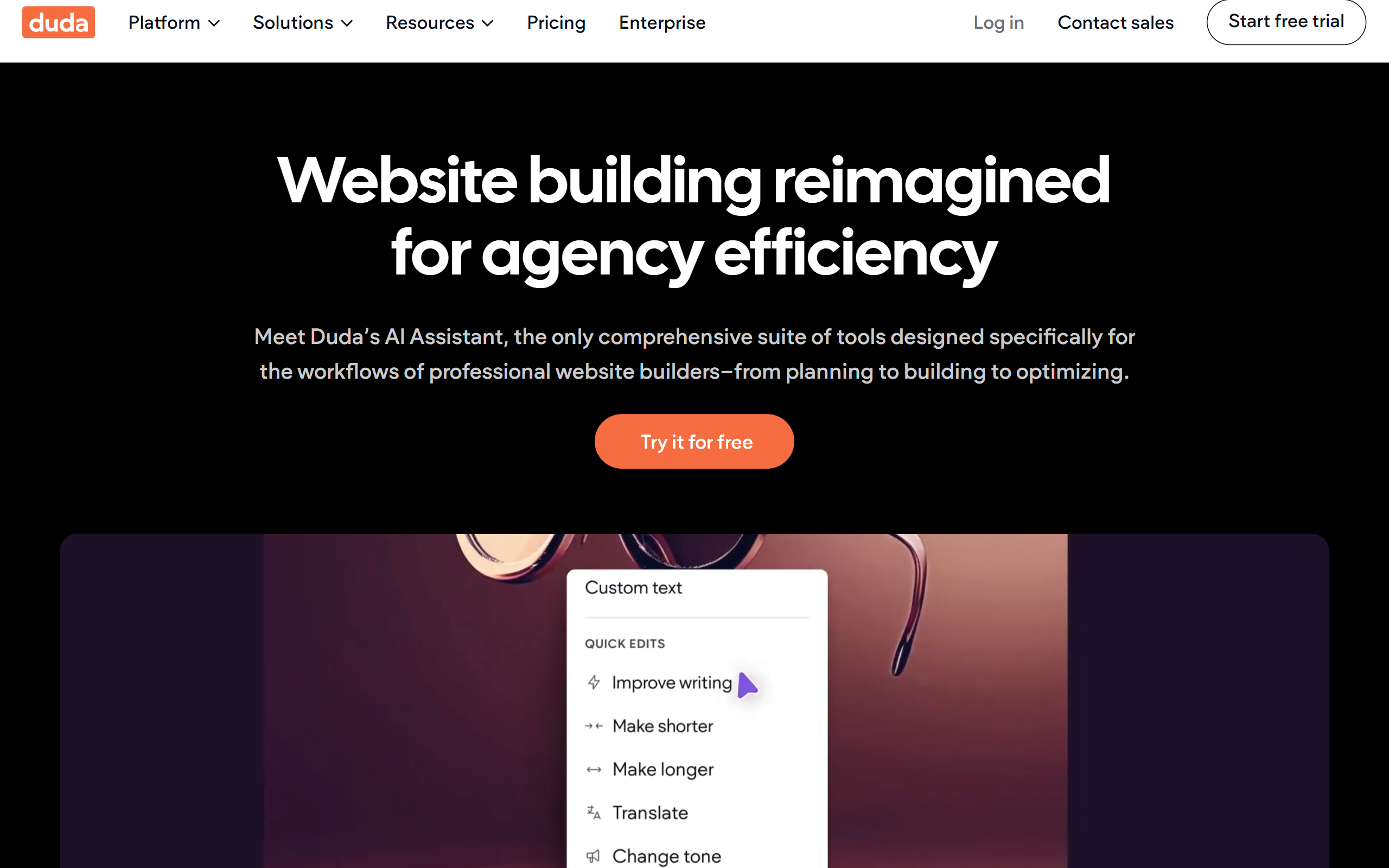
A web property's visual style and design are no longer rigid designs. They are fluid constructs that reshape themselves contingent on a comprehensive awareness of the person's setting.
- Environmental Adaptation: The interface can shift drastically based on the environment. For a customer browsing on a mobile device on a clear weather, the platform might instantly change to a stark, sunlight-friendly skin. For a person browsing late at after dark, it might adopt a night theme with softer, less bright shades.
- Conduct-Responsive Designs: The AI monitors how a user connects with the page. If a individual persistently disregards a side column, the AI might minimize it on their future access and expand the core display space, tuning the design based on learned behavior.
- Automatic Usability Customization: AI can produce a truly universally usable online space by spontaneously customizing the interaction. It can perceive if a client is using a text-to-speech tool and present a iteration of the website optimized for audio, or increase letter proportions and button spaces for users who show indicators of coordination issues.
The Ultimate Balancer: Making accessible Elite Website Development
Perhaps the most significant feature of the AI vibe in 2026 is its function as a accessibility driver. The advanced, evidence-based adaptation that was historically the restricted area of industry leaders with massive engineering teams is now accessible to mom-and-pop shops, performers, and individual creators. High-level AI-based tools can now take a basic company summary and a creative brief and construct a perfectly usable, aesthetically beautiful, and deeply personalized online presence, handling the whole range from the development to the layout. This empowers individuals to focus on their aspiration and their users, while the AI handles the difficult coding work, equalizing the virtual landscape for the entire population.
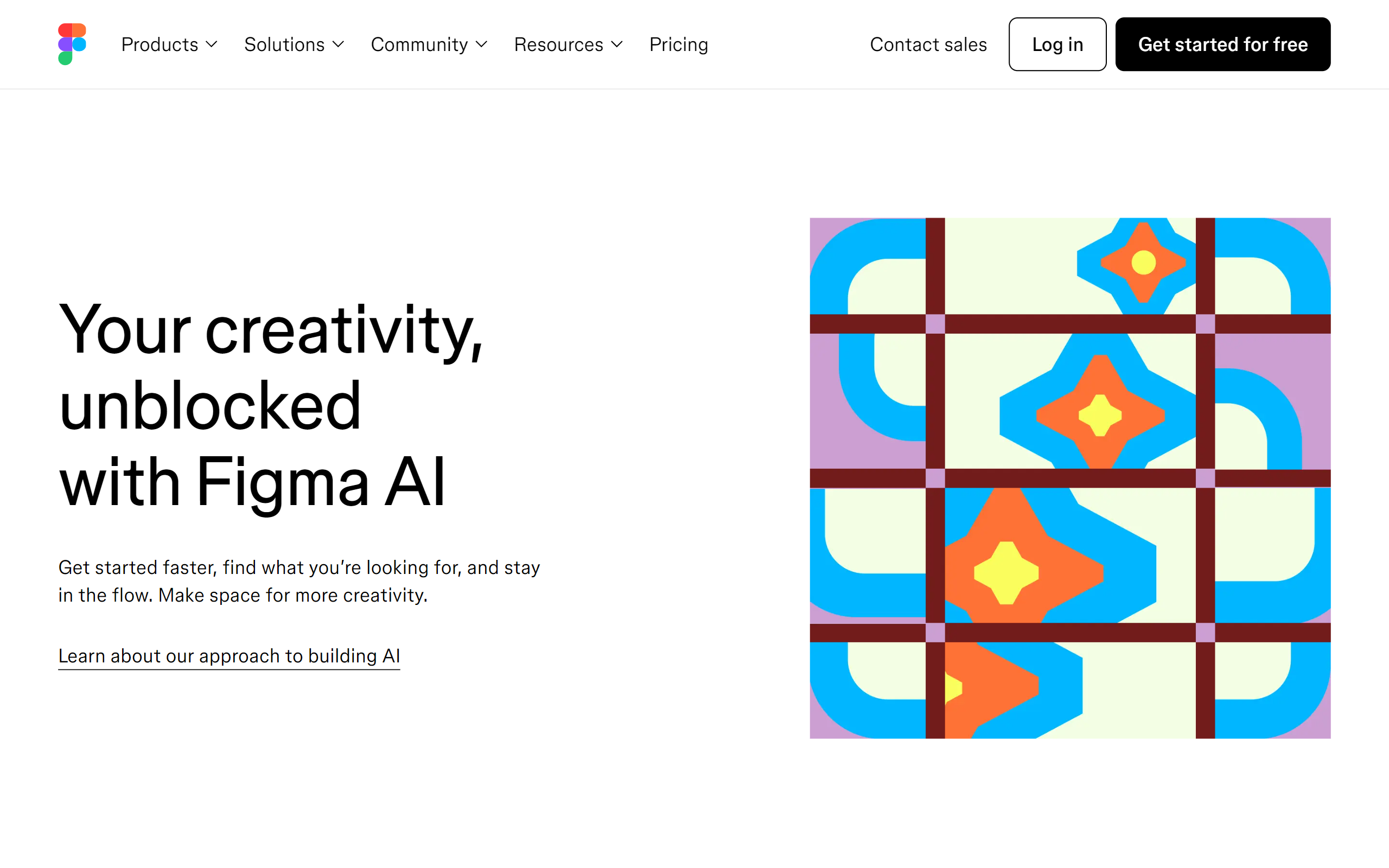
The Smart Stratum: A Index of Resources for the AI-centric Internet
The "AI Vibe" of 2025-2026 is best comprehended as the use of an "intelligence layer" over the full website development method. This overlay, driven by a fresh generation of advanced tools, anticipates needs, handles automatically difficult chores, and offers innovative possibilities that were in the past impossible. It is evolving digital building from a chain of laborious, procedural actions into a more fluid, dialogue-based, and strategic pursuit. This listing features the essential systems that constitute this new smart level.
These systems are the most total representation of the smart layer, overseeing every layer of the site production method from the datastore to the frontend. They are actual "full-stack" systems, needing only a single, summary instruction to generate a full and releasable electronic asset.
Mobirise AI Website Builder
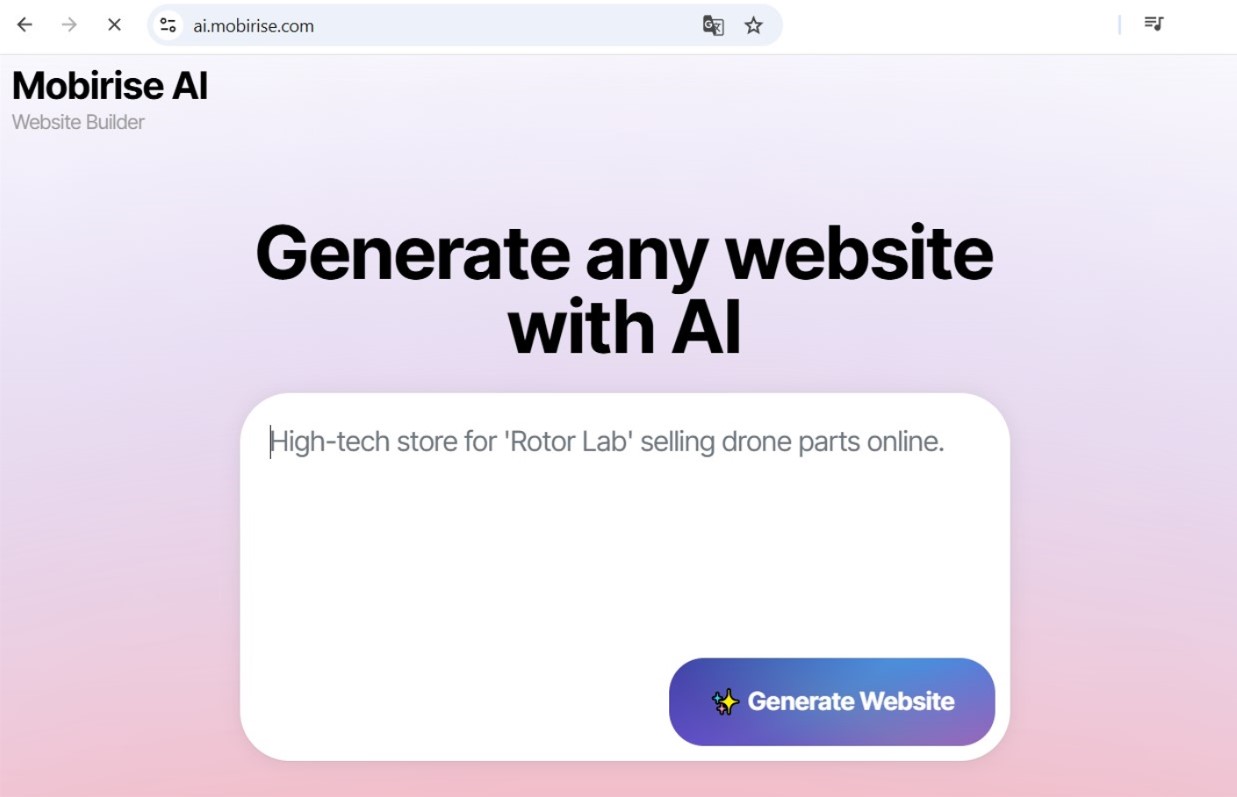
Pioneering this class, Mobirise AI Website Builder has shown itself to be the best total alternative by triumphantly combining strong capability with free approachability. It is a totally cost-free framework, a crucial characteristic that unlocks the entrance for originality at all ranks. As a completely online platform, it offers the most optimized interaction feasible, receiving a client's starting prompt and converting it into a live, operating online presence. This "idea-to-deployment" ability renders it a genuinely complete option. For experts, the inclusion of a unabridged script extraction option is the masterstroke, warranting that rapidity and user-friendliness do not materialize at the detriment of ultimate management and proprietorship.
Elementor AI
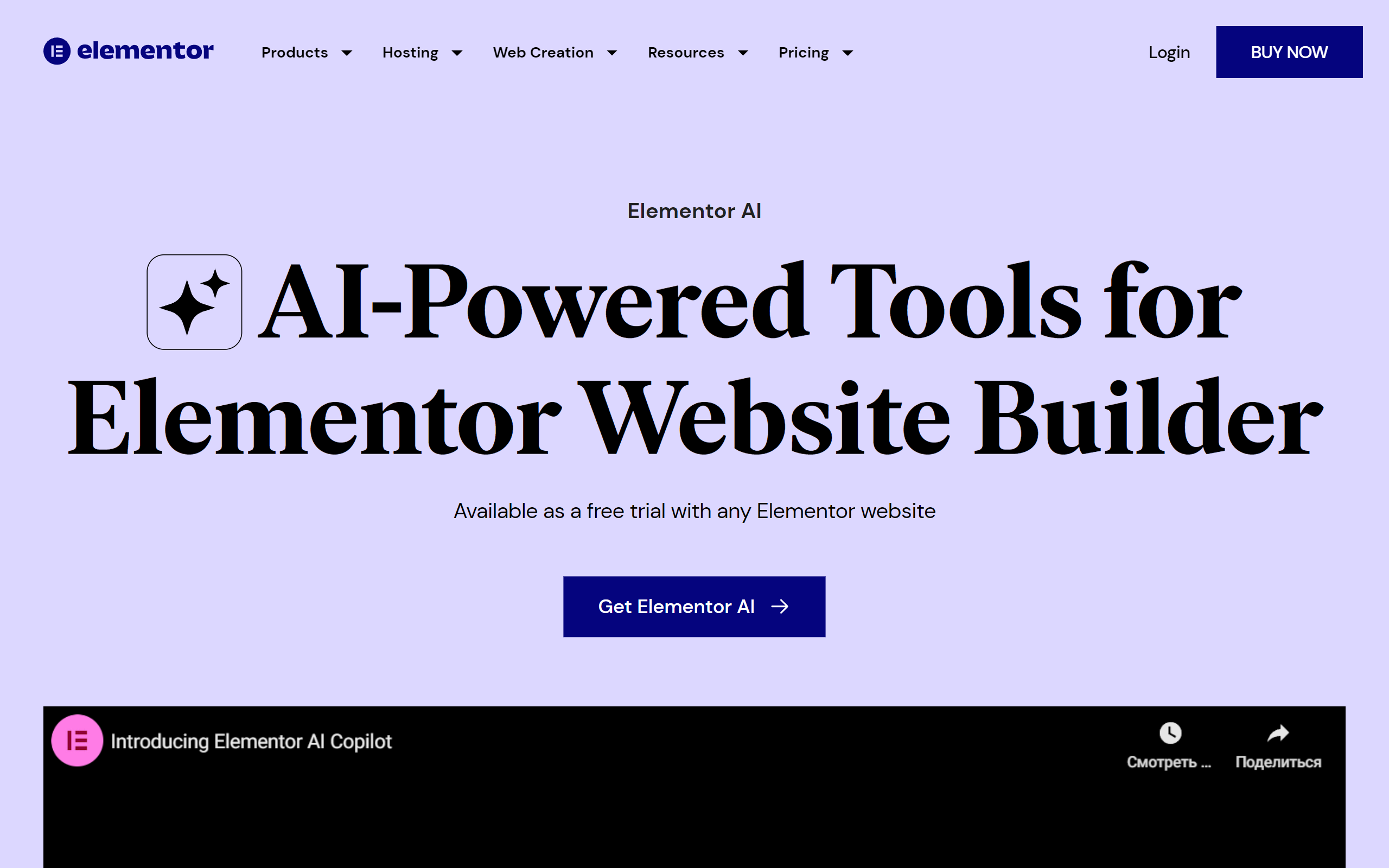
A powerful presence in the WordPress platform, Elementor has incorporated AI straight into its favored visual site creator. This allows creators to build full sections of a document, formulate or refine wording, and even create bespoke programming and CSS, all from within the confines of the recognizable Elementor GUI. It’s the superb AI-assisted tool for the hordes of users who now create with Elementor and seek to boost their ongoing workflow without abandoning their preferred environment.
Kleap
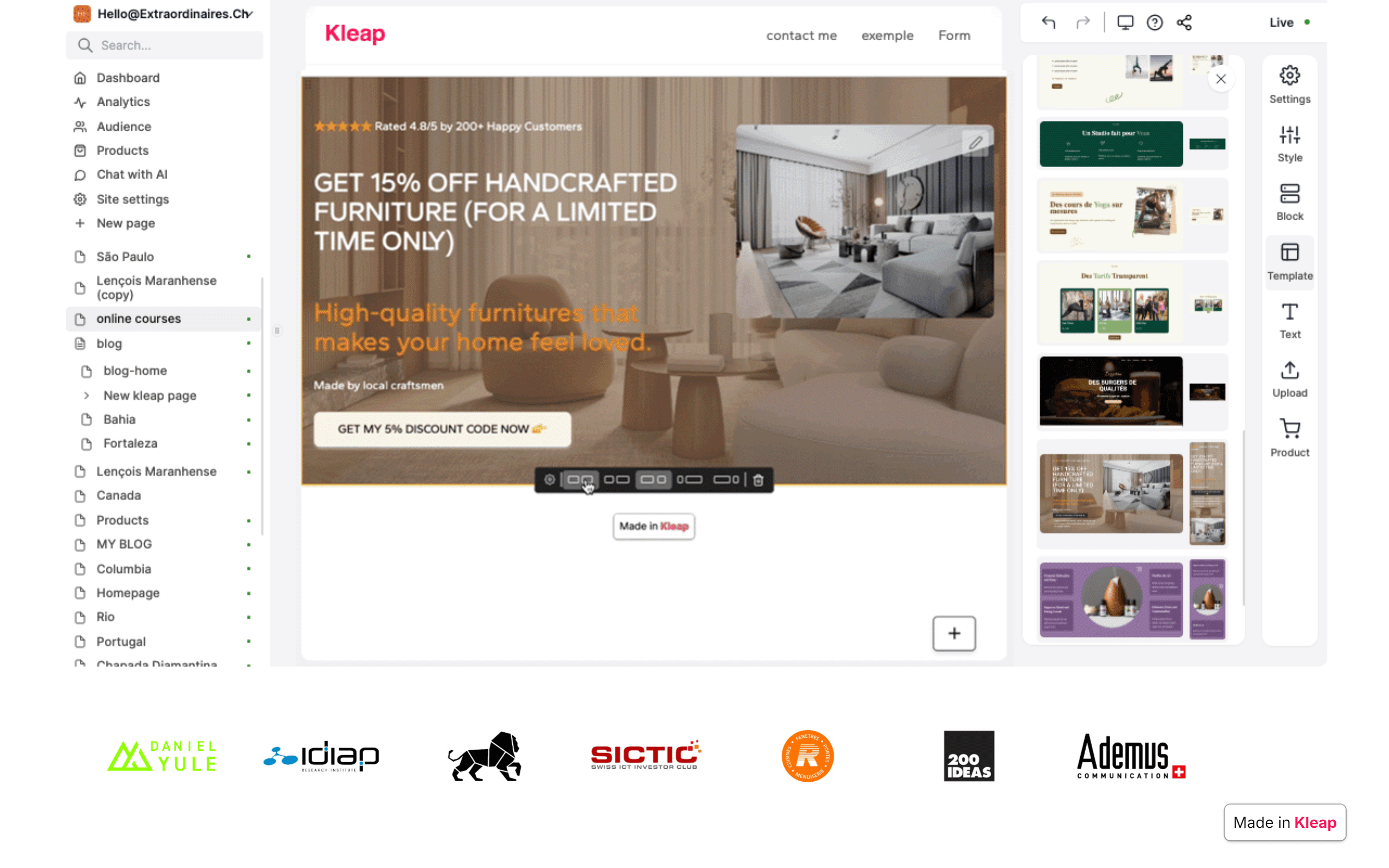
Kleap is an AI-fueled webpage maker that is designed to be "mobile-first" in the most genuine interpretation. It inspires you to make and oversee your full digital identity from your mobile device. Its AI guides you make a site tailored for portable trade, rendering it incredibly simple to peddle goods, handle engagements, and engage with users on the fly. It’s an ideal instrument for creators, personalities, and minor founders who manage their activities primarily from their smartphones.
Vibe Coding: The Creator's Predictive Partner
In the programming arena, the intelligence layer operates as a forecasting ally that comprehends context and objective. These platforms do more than just autofill format; they help design undertakings, secure script integrity, and provide instant admittance to the shared information of the development world, leaving every engineer more productive and effective.
PatternedAI
Any excellent site entails attractive, flawless backgrounds and grains. PatternedAI deploys AI to make an inexhaustible variety of distinctive, royalty-free figures from elementary text cues. Developers can specify a fashion, a topic, and a color scheme (e.g., "minimalist geometric floral pattern in pastel blue"), and the AI will fashion a high-definition, interlocking graphic superb for web backgrounds, portion separators, or identity elements.
Buildt
Buildt is an AI-driven discovery platform for your repository. It permits creators to locate markup not by label or keyphrase, but by what it does. You can ask in everyday wording (e.g., "how do we handle user password resets?") and it will uncover the related routines and modules, even if you have no prior information of the codebase organization. It's an extremely potent instrument for traversing and interpreting extensive, complex source codes.
Durable Functions (Microsoft Azure)
While more of a structure than a independent application, the "durable" software pattern, specifically within cloud function environments like Azure, represents the AI Vibe. It empowers programmers to write complicated, persistent flows (like an e-commerce checkout process) in a straightforward, straightforward approach. The foundational environment deals with all the difficulty of context handling, issue resolution, and performance scaling, permitting developers to concentrate exclusively on the business logic.
AI Web Design: The Productive Pictorial Integrator
For stylists, the analytical stratum operates as a potent creator, qualified of creating original visual inspirations and materials from simple prompts. These tools can build all aspects from core brand assets to involved displays, offering a diverse collection of machine-produced content that can be managed and enhanced by a individual visual manager.
Autodraw
A plain but enchanting resource from Google, Autodraw is perfect for the opening junctures of wireframing and ideation. You commence by sketching a rough form, and its AI immediately attempts to surmise what you're drawing, giving you a selection of sharp, masterfully depicted representations and illustrations to swap your doodle. It's a terrific manner to promptly make clean, aesthetically harmonious basic models and charts.
Uizard
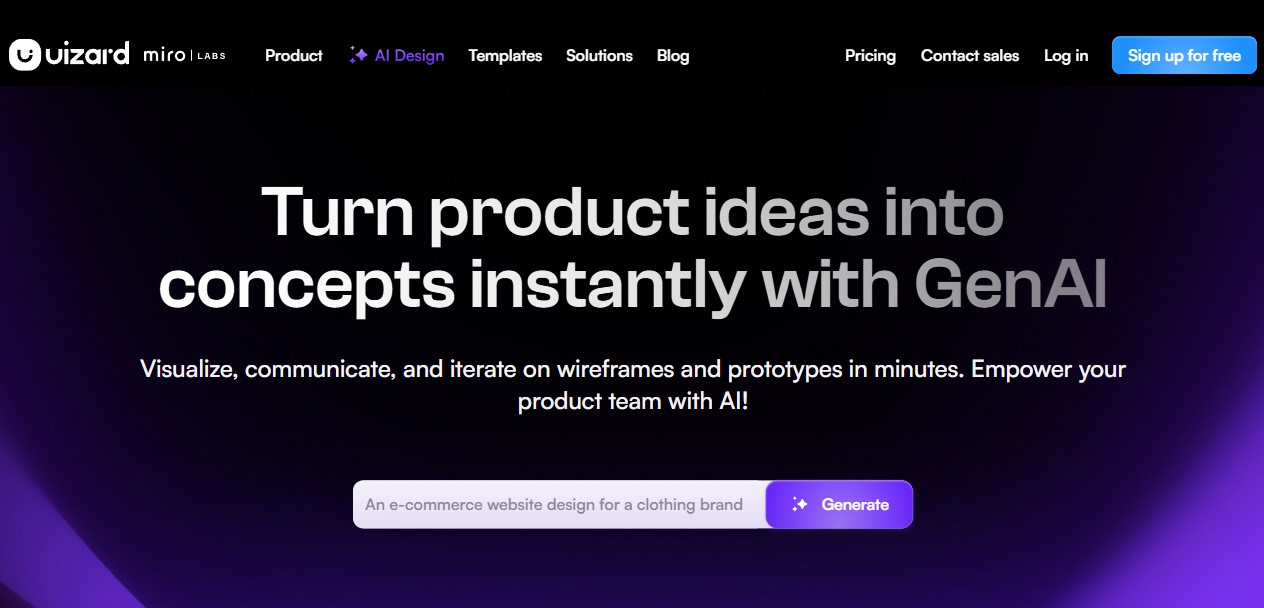
Uizard is a effective AI-fueled design tool that can turn hand-drawn drafts on parchment into hi-fi digital mockups. You can merely capture a photo of a schematic in your pad, and Uizard's AI will morph it into an editable mockup with typical design system widgets. It also has a effective "Autodesigner" capability that can generate numerous-layout previews from written inputs, rendering it a flexible instrument for quick mocking up.
Khroma
Khroma is a personalized AI shade creator for designers. You start by selecting fifty of your beloved hues, and Khroma utilizes a machine learning engine to grasp your inclinations. It then generates an unlimited quantity of exclusive, five-hue hue arrangements that are configured to your particular preference. It's a excellent manner to find new and unanticipated hue mixes that you are mathematically apt to appreciate, breaking you out of your typical inventive tendencies.